



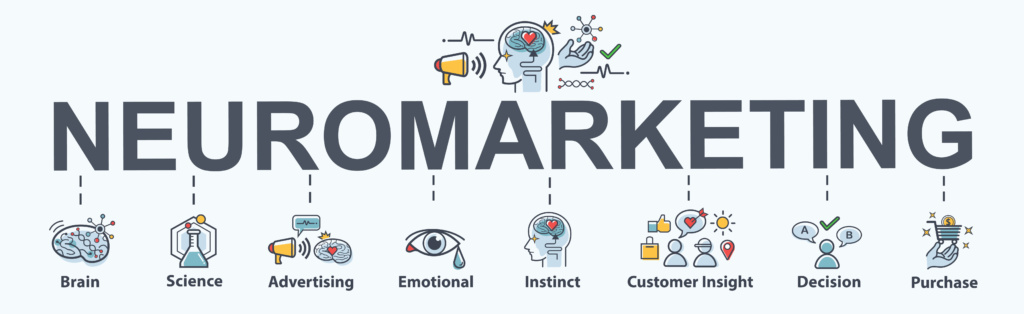
“The way neuroscience and neuro-linguistic programming helps your sales is by allowing you to better understand your prospects’ thinking and their motivation to buy your product. This means more satisfied purchasers for your product.”
~ Chandell Labbozzetta
What is Neuro-Linguistic Programming?
Neuro-Linguistic Programming is the study of how the human brain receives and processes information. If you study the speeches and tools used by influential leaders from the earliest stages of recorded history, you’ll find the essence of NLP techniques and principles inside.
NLP is frequently studies to elevate communication skills, improve negotiation, and generally help people to understand others better. Since successful relationships are at the heart of human happiness, Neuro-Linguistic Programming (NLP) is a very powerful tool for everyone. It is an especially popular field of study for salespeople who want to understand their customers better and deal with the challenge of discovering whether what they are selling would serve them or not.
Neuro-Linguistic Programming can be broken down into three parts:
Part 1: The Neuroscience of Sales:
To understand the neuroscience of sales, we first have to look at the brain. The brain is an intricate network of neurons, or nerve cells. The neurons communicate with each other by firing electrical impulses through “synapses.” They also connect with other neurons in an area called the “cortex.” These connections are like pathways. They can be reinforced through habitual behaviour and altered by creating new behaviours or patterns.
Part 2: The Neurons:
The brain processes information through triggers, which is why Neuro-Linguistic Programming incorporates several techniques that enable you to auto-trigger new behaviours to replace existing ones. It also explains why you can have a visceral response to a person without any overt reason – it could be based on remembered associations and experience (positive or negative).
Part 3: The Linguistics:
Language is a complex system. Even though it is responsible for only around 7% of the information we receive, understanding how language works and the ability to interpret what others are really saying, as well as to grasp how they are hearing our words not only improves your relationships at home and work but also helps salespeople understand what their prospects are thinking and when they have made up their mind to say, “No,” but are too polite to actually articulate that.
Neuroscience and Neuro-Linguistic Programming in Sales and Why I Love Neuroscience!
The reason I love neuroscience and neuro-linguistic programming in sales is because it is so fascinating to watch different areas of the brain light up in response to stimuli and to recognise that just as you can re-program your own thoughts and responses, you can also use that knowledge to better connect with your prospects by understanding their emotions, feelings, and motivations.
Once you’re aware of this, you don’t need sophisticated brain monitoring equipment to gauge how prospects are responding to your sales call, you just need to use your eyes, ears, and intuition. You’ll quickly recognise the difference between genuine objections, and the excuses of a person who has already made a decision, and you’ll understand the best way to respond to help them choose wisely.
Unlike what you may have seen on TV or in movies, there is nothing in NLP that removes your prospect’s freewill and self-determination. Your skill in using NLP will only help you understand your prospect’s true concerns.
NLP Sales Techniques to Increase Your Sales
Here are 5 NLP sales techniques that you can use to increase your sales.
- Understand Buying Strategies – everyone has a specific ‘strategy’ for buying (as well as almost every other area of life). NLP helps you discover exactly what each of your prospect’s unique buying strategies is and how to use the knowledge appropriately. This is especially important for selling high-ticket items.
- Improve Your Timing – based on your understanding of each prospect or client’s buying strategy you can build a flexible sales system that enables you to meet their needs for information, alternatives, and spacing of calls. This way, your prospect always feels as though they are in control of the buying decision.
- Build Rapport – by showing genuine interest and enthusiasm for the person you are talking to and by reflecting their preferred communication style in your choice of language. Focus on being interested, rather than being interesting.
- Empathise – with customers by understanding their feelings and motivations. When you understand these – and demonstrate that understanding – you can better help them make a decision.
- Promote your sales – by reminding yourself and your customers why you sell. This can include using reminders, journaling, and imaging to keep the value of the product or service front and centre.
Understanding NLP & Neuroscience Gives You More Control in Sales
Zig Ziglar famously said, “Timid salespeople have skinny kids.” This is often misunderstood. It’s interpreted to mean that effective salespeople need to be pushy and sell people ‘stuff’ they don’t need and can’t afford… But that is certainly not what Zig intended. As much as anything, Zig’s point was about developing your communications skills so that you help the other person recognise what they really want and see their objections either as genuine reasons why they don’t need what you are offering or as an excuse that is preventing them from getting the outcome they desire.
The real advantage that honing your NLP skills offers salespeople is the ability to gain insight from the language and non-verbal communications of prospects about their real attitude. That enables them to tailor their presentation to the preferences of the prospect and meet their needs.
What Will You Do With This Information?
The internet has completed the democratisation of knowledge.
What you know has much less power than your ability to use that knowledge effectively: that is, having the skills and discernment to use your knowledge for good. As a Master Trainer of NLP and one of Australia’s most effective sales trainers, I know that transformation and skill development is about practice and habit-building… And sometimes removing old habits that no longer serve you. This is especially important in a tight economy where your prospects are more cautious about their investments and expenditures. That’s why NOW is the time to develop and hone the communication skills, of your salespeople and all those in leadership positions.
If you know you need some help, why not explore our Ready Set Sell Program which teaches you to build the habits and skills you need over 30 days? We promise you won’t regret it!

“When it comes to making sales… The simple truth is that we do business with people we like. That’s why relationship building in sales is so important.”
~ Chandell Labbozzetta
When you’re trying to build your business and make sales, it can be difficult to come across as genuine and friendly. You don’t want to seem fake; you just want people to see the value in what you sell. That’s why I believe it’s important to work from the inside out and build relationships rather than rely on tricks and techniques. Your prospects have a BS antenna, just like you do. Luckily, there are plenty of Neuro-Linguistic Programming (NLP) and communication tools to make building relationships in sales an integral part of your personality instead of a conscious facade. Read on for six simple ways you can work on building relationships to make more sales by being more self-assured and authentic.
Be a Confident Sales Person
Many people find it difficult to be confident salespeople or they don’t know how to convey confidence in themselves and their sales abilities to others. They can come across as over-assertive or pushy and that is never a good look.
The challenge is to communicate genuine confidence, not the fake kind. You can boost your confidence by thinking positively, doing a little exercise, and practicing to make yourself feel better.
The problem is that positive thinking takes will-power, and sometimes we’d rather just drift along. That’s where a specific NLP technique can get you back on track and keep you from getting down when things aren’t going your way, and it also helps you stay enthusiastic when things are going well. Even if you don’t understand NLP, here’s a habit that anyone can develop:
- Write down three things you are good at as a sales person – (your notes app on your phone is a great place to do this)
- Also write down three things you are not so good at.
Every time negative thoughts start to pop into your head, add to both these lists by writing down another three things you are good at and three things you are not so good at.
Over time, you’ll collect a robust list in both of these areas. That way, instead of worrying about the things you cannot control, you’ll be focused on the things you can control. Here are a few more tips that can help boost your sales:
Speak from Your Core Values
If you want to make meaningful connections with people, you have to speak from your core values. When you do this, people feel a stronger connection with you, are more likely to value your products and services, and want to get to know you.
A great way to boost the number of people who understand and appreciate your core values, is to start by telling your story in a more personal way. This doesn’t mean that you spend hours talking about yourself, though – that will just make people think that you are self-absorbed. Instead, find a simple way to connect your story to your core values using metaphors and analogies.
Your team members should also speak about their core values – and hopefully they share your esteem for the business you all work in. It’s ok to acknowledge that your product or service doesn’t suit everyone – in fact, that’s a great way to frame your questions and dig deeply for information about the person you are talking to. If you ask the right questions, just about everyone (except for undercover ASIO agents) likes talking about themselves.
Show Yourself and Your Team in Real Life
One of the best ways to convey your core values and build relationships in sales is through non-business-life examples.
We all know that people have a life outside their work, and when you can communicate that you often find unexpected links and connections with your prospects. I’m a keen golfer and as long as I don’t talk about it too much with people who have no interest in golf, it’s a great way of developing a relationship with people who share my interest.
It’s the same for your team members. Encourage them to engage with prospects appropriately and build rapport via non-business interests in pets, hobbies, etc. You should always remember that everyone has a human side no matter what their role in the company.
Stay Flexible and Adaptable
One of the core principles of Neuro-Linguistic Programming (NLP) is that “The person with the most flexibility controls the conversation.” In sales, it’s your responsibility to make adjustments to the conversation and offer so that you highlight the factor that whoever you’re speaking to is most concerned about.
It’s important that you don’t let these adjustments lead to you losing control of the sale and letting your prospect dictate the terms of the sales and delivery. If you aren’t getting the results you want, you and your team should gather information and discuss it carefully. Businesses need to adapt to market conditions, competitors, and prospects’ needs and you should be prepared for this kind of adjustment.
This is also true when you’re having a conversation. Just because you’d planned to spend more time discussing a particular benefit of your product, if you realise that your prospect has not interest, then move on and find the point of pain where they are really interested. If the point you wanted to make was critical to their buying decision, you can circle back to it later using a lateral chunk.
Help People Feel Good About Themselves
If you want to build lasting relationships in sales with prospects and clients so that you keep doors open for further deals, then you’ll need to make a concerted effort to boost the amount of time you spend helping others get what they want. Zig Ziglar used to say, “You can get anything you want in life if you spend enough time helping others get what they want.”
That is an important principle to keep in mind. Figure out what your prospect wants and find a way to position your product or service so that it helps them achieve that. It doesn’t have to take a lot of time, but it will not only help others, but it also helps you feel good about yourself.
NLP Can Help You Build Better Relationships in Sales
There’s probably a reason why NLP didn’t become a formal discipline until the 1950s. It’s most likely connected to the fact that up until the early twentieth century people lived a lot closer to each other and were far less mobile.
That meant that you already knew most of the things you had in common with the people you did business with, and you didn’t need to work so hard to build trust. The chances are that others already knew you from school, family, and church settings, and that you had had plenty of opportunities to develop your communication and conversation skills over time.
It’s different now, which is why people who want to excel try to enhance their understanding of how people think, act, and react… And why NLP tools and techniques are important to help us build relationships in sales.
At Life Puzzle, we are proud to offer the best NLP courses in Australia. Our courses are guaranteed to improve your or your team’s sales skills as we offer a mix of both theoretical and practical NLP sales training. Our NLP courses are designed to provide you with all the tools and techniques you need to be a successful salesperson.
We cover everything from understanding the psychology behind why people buy, to learning how to build rapport and connect with people in a practical way. Our NLP courses are suitable for both beginners and experienced salespeople as we offer a range of courses that cater to all levels. If you are looking for NLP training in Australia, then contact us today to find out more about our NLP courses.

“For every complex problem there is an answer that is clear, simple, and wrong.”
~H.L. Mencken
Businesses Large & Small are Doubling their Investment in Sales Training with NLP Sales Techniques
Businesses getting their team trained in NLP sales techniques is a strategically proactive move designed to ensure that they have the deal flow and cash flow to expand as the economy tightens and new opportunities present. It’s a well-established fact that investment in sales training is one of the biggest drivers of resilience during economic turbulence, which is great news for sales training organisations.
The questions I have for you are:
- Will you be left behind?
- Are you getting the sales training you really need?
Many organisations keep offering their sales teams (and these days everyone from receptionists to account executives to implementers are part of your sales team and should be trained) the same tactical sales training over and over again. The reality is that what most people need to heighten their sales skills is sales training that focuses on elevating mindset, communication, and interpersonal skills – the basic scripts and tactics are good starters but the highest performing salespeople are those whose prospects feel that, “My concerns were heard and responded to and I am convinced that this is an excellent decision.”
That makes sales training both easier and harder to design and deliver. It’s simple because your primary goal is to ensure that you focus on taking their mindset, communication, and interpersonal skills to the next level – the principle at the heart of Neuro-Linguistic Programming (NLP).
It’s hard because while you can make dramatic progress almost instantly and accelerate your sales, it takes time and practice to heighten those skills and make them habitual so you can get dramatic results in a 2-3 day (or even hour) training, but it takes consistent reinforcement for most people to make them stick.
Chandell is a Best-selling Author, Master Sales Trainer and a Master Trainer of Neuro-Linguistic Programming (NLP). Experience has taught her that Sales is the #1 Life Skill and that anyone can master it: without this critical skill, your relationships, opportunities, health, and finances all suffer. Take a look at my NLP sales training courses today.
The Danger of Echo Chambers in Sales Training
It’s part of human nature to spend most of our time listening to the same people (usually those with whom we agree, sometimes those who make us angry).
BUT… It’s incredibly dangerous to do this in a rapidly changing world!
As the proverb says, “If all you have is a hammer, then every problem is a nail.” This is a particularly effective strategy for a carpenter, but it’s a disaster for a business owner or salesperson because it makes them ignore the reality around them and often means they miss the opportunity that is staring them in the face.
We all have our preferred mentors, experts we follow, and strategies we adhere to… And that’s essential. If we didn’t, then we’d go crazy jumping from one strategy to the next and never give anything a chance to work.
At the same time, it is also important for each of us to make sure we protect ourselves against the dangers inherent in our own echo chamber by exposing ourselves to other opinions and perspectives especially when it comes to sales.
Listen to Different Perspectives to Boost Your Sales
I have certain people and communities that I’m part of who have an enormous influence on my decisions, and I believe listening to these different perspectives is a great way to boost sales. One of the reasons why NLP is such a key tool for sales professionals is its emphasis on training people to set aside their assumptions and hear what is really being said.
In addition, I also schedule time every day to explore and listen to these different perspectives of people in all areas of life and thought – people who challenge my point of view because they force me to clarify and learn from them.
I encourage you to do the same and make a habit of listening to people who hold different points of view.
Stepping Out of Your Sales Echo Chamber
No matter how valuable your existing community is, you should also really listen to people on the ‘other side’ (and have an open mind as you do so) because it will help you clarify your views and expose weaknesses in your existing sales processes. You may think that you have everything sorted out, but there are always ways that you can step up your effectiveness.
As a business owner or sales professional, you need to pursue a definite goal and follow a clear path if you want to accomplish anything, but you also need to recognise that there are other possibilities for achieving the same aim – and some of them may enhance what you are already doing.
I always challenge my students to choose one area in which they hold strong views and listen to the opposite point of view presented by a credible adherent on their own terms.
Let’s be topical here and talk about sales training:
- There are multiple views on how to conduct a sales call and I’m sure you have one.
- Find a credible expert who holds an opposing view and listen carefully to their argument and supporting facts.
- You don’t need to change your own sales process, just acknowledge that the other side does, in fact, have a reasonable argument with which you disagree.
- You can go one step further and identify why you disagree with the perspective.
- You can be truly courageous and ask what can I learn or apply from this approach.
Today’s society is more polarised than at any time in recent history. We run the risk of becoming the kind of global society that condemned Galileo because he didn’t bend his thinking. You can spearhead the shift by opening your own ears to other perspectives – or you could start a movement by offering your sales team powerful training that transforms their ability to really hear what people have to say.
The Most Effective Sales Technique is…?
The most effective sales technique is that which makes your salespeople better listeners and communicators and Neuro-Linguistic Programming (NLP) sales techniques are the way to go. There’s no question that merely being exposed to NLP sales techniques improves communication skills.
BUT… Very few NLP sales training courses reinforce those skills and reteach them until they become habitual patterns – and very few individuals have the discipline and commitment to keep studying and practising them on their own. This is one of the distinctive characteristics of Chandell Labbozzetta’s NLP Sales Mastery Academy and one of the reasons why international companies invite her back year after year to train everyone from executives to receptionists.

“Selling is about being face-to-face with a customer, truly hearing what they say (not merely ‘listening’) and responding appropriately. When you’re selling by phone or virtually, you need your skills to be more finely honed, not less – that’s how you can use NLP to boost your sales.”
~ Chandell Labbozzetta
Neuro-Linguistic Programming (NLP) Sales Training = More Important than Ever
As the world shifts back to face-to-face interactions, you’ve probably realised that some of your communication skills are just a little rusty. If so, you’re part of the honest majority who acknowledge the problem and have decided to do something about it – which is where neuro-linguistic programming (NLP) sales training comes in.
Maybe you’re making an effort to attend in-person networking events and conferences or go to the office a couple of days per week rather than work from home. Perhaps you’re going out to restaurants more or hanging out in a coffee shop… But when you look around you realise that there a lot of people who seem to be struggling to communicate and interact.
I get that.
Conversation is like music, a foreign language, dance, or any other practice-based skill. You use it – or you lose it. The first step is to acknowledge that you have a problem and not just pretend things are ok.
The next step is to recognise that this is an opportunity for you. Rather than merely regaining your previous level of expertise in conversation (as opposed to chit-chat), you could choose to become a deliberately skilled communicator. NLP sales training allows you to present your ideas (as well as your skills and products) persuasively in ways that resonate with your audience whether that is one person, a small group, or an auditorium filled with eager listeners.
At Life Puzzle we have a distinctive focus on actually practicing the techniques with precision, understanding the psychology that makes them effective, and exploring real life applications at an appropriate level. If you’d like to find out more, check out our NLP sales training page today.
NLP Sales Techniques Help When Subject Knowledge Is Not Enough
Of course, you know what you are talking about. That’s just your entry card, though.
The key to influence is understanding how your audience sees the subject and its relevance to them. Whether you’re having a conversation or making a speech, you need to make the connections for them – and that’s a skill that Neuro-Linguistic Programming (NLP) sales techniques can help you develop.
You see, all successful salespeople know their product and can explain its relevance and benefits to the user, but the ultra-successful ones know how to read their audience and deliver group presentations that appeal to people with a range of communication styles. Using Neuro-Linguistic Programming (NLP) techniques, these same master communicators and salespeople are also great conversationalists in both large and small groups because of their ability to listen to others and shape their responses to appeal to them.
When it Comes to NLP and Sales, Congruency is Key
NLP and sales go hand-in-hand, but some people think it is manipulative.
I have two responses to this:
- All communication is manipulative – it springs from the desire to inform others and shape their thinking and actions. That’s true, even if it’s as simple as asking someone to take out the rubbish bins, shut the door, or do their homework. ‘Manipulation’ as a pejorative term is a misuse of human character.
- What is your intention? Are you trying to achieve your own goals or to help the other person? Do you speak from a place of genuine conviction and concern, or is your intention purely self-centred?
I really hate the idea of ‘fake it till you make it’ or taking a position because you believe it will give you an advantage even if you don’t really believe it. If you’re in sales and you aren’t getting results, my #1 question is always:
“Tell me about the product you are selling. Do you believe it represents value for your customers?”
NLP teaches us that our words are only around 7% of our communication – that’s true even on the phone. If you are making sales calls and not getting results, you are either talking to the wrong people or you have a problem with congruency… No amount of sales training, NLP, or anything else will help you sell a product that doesn’t serve its purpose – but NLP sales training can help you develop and communicate congruency around the value you deliver and the price you charge.
The Results of Using NLP in Sales
James knew his product statistics inside and out. He could recite the features and highlight the benefits it would deliver to the buyer. He was personable and motivated, but he wasn’t really getting the sales results his manager wanted even when he was speaking to qualified customers.
He attended an NLP training session I presented on “Confident Closing” and was able to identify the underlying problem that was strangling his sales. Then, using the NLP skills he had learned in that short period, his sales results picked up significantly, and his manager was delighted.
James had also enrolled in my NLP Sales Mastery Academy which I designed to give people a chance to both learn and apply their NLP knowledge in a deep way. There are real advantages of immersing yourself in an intensive NLP training course (and I love delivering those and seeing the transformation), but so many people go home from their intensive and forget to use all the resources they gained!
As James learned the NLP communication (and self-mastery) tools and was challenged to apply them in new ways, he went from a successful salesperson to a master salesperson and superb communicator in just twelve months, and his career blossomed.
If you want to be like James and become an NLP Sales Master, contact us today.

“When the economy is booming, almost any product is easy to sell; when the economy tightens you need to double down on your sales system to turn leads into sales.”
~ Chandell Labbozzetta
The Reason Your Sales System Isn't Working Is NOT the Economy
Over the past few months, there has been a dramatic shift in the perception of prospects I’ve been talking to – especially when you compare them with my clients’ perception of the market. A few months ago, many business owners and sales managers were confident in their ability to make ‘enough sales to meet income targets and quotas’. Now they’re struggling because their prospects are nervous about the future and their communication skills and sales systems aren’t robust enough to cope.
One of my clients made the following comment,
“When the GFC was looming in 2008 (it hit Australia later and less dramatically than other parts of the world) we saw exactly the same thing – making sales of your product or service went from being like offering candy to a toddler, to being more like offering meat to a vegan. It took a genuine ability to understand where the prospect stood and what they cared about, to communicate that understanding, and to offer your product in ways that made it easy for them to say ‘Yes’. Suddenly, sales skills and systems shifted from ‘nice to have’ to ‘critical for survival. The same thing is starting to happen now and it’s slowly spreading from one industry to another. It’s time to brush up on your sales systems and skills… Or pay the price.”
We went on to discuss the fact that it’s not the economy per se that is the problem, it’s how you present your offer in the new climate.
If you keep on doing what you’ve always done in your sales process you will no longer get what you’ve always got… You’ll keep getting fewer sales and less revenue.
The Sales System You Need in a Boom Will No Longer Serve You!
Sally (name changed to protect her privacy) has been in one of my NLP Sales Mastery groups for several years. She’s one of the sales managers at a mid-sized company and she’s chosen to invest in her communication skills so she can also pass them onto her team. Until just a couple of months ago, there was very little difference in the performance of her team and others, but as the economy started to tighten, she discovered that she was closing significantly more sales than her team, and that her team was performing better than all the others. Her colleagues were coming to her and asking what she was doing and whether she could help them develop the same skills and systems.
That’s great for me, because I was contracted to train and develop all the sales teams at her company, but it also demonstrates how the economy is changing and the importance of being prepared for a downturn.
A Successful Sales System is No Longer About Slick Sales Skills… If It Ever Was!
The key reason that my sales trainings are so popular is that they are effective. I really can turn the sales-allergic into sales-enthusiastic because I focus on communication skills. Most people who have an ‘icky feeling’ about sales have that feeling because they think of sales as one person pushing the other into an agreement they don’t really need. I teach people to walk away from sales where your product won’t benefit the prospective buyer and won’t deliver far more value than the money they are paying. You’d think that would lead to fewer sales and appointments, but it actually leads to more sales.
Effective salesmanship was never about shoving a contract in front of someone and forcing them to sign, it was always about discovering what problem the prospect wants to solve and determining whether your solution fits their needs and budget. When the economy is good and interest rates are low, businesses spend freely so you don’t really need to develop rapport and communicate with sincerity, but when interest rates rise those things make all the difference. It doesn’t matter how good your sales scripts are, or how well designed your follow up is if your salespeople can’t establish a genuine connection.
By the same token, it doesn’t matter how good their communication skills are if your salespeople aren’t supported by robust sales systems that enhance their results. I’m a big believer in continued professional development that focuses on expanding personal skills, not merely providing ‘hacks and techniques’ and communication is one of those areas of personal growth that many sales teams don’t focus on… or not until they absolutely must!
The Truth About Sales Systems
“A sales system is only as good as the people who use it… But without good systems, skilled people can underperform.”
That truth is just as applicable to sales as it is to exercise, nutrition, health interventions, and education.
If you don’t have a system for taking care of your health, you’ll quickly lose track of essential medications, dietary needs, exercise, and other important factors. If there’s no system for education (ie curriculum), kids won’t learn to read, write, count, and think.
At the same time, if you don’t have skilled doctors and inspiring teachers, the ‘system’ will only take you so far.
Your sales system is just as essential as those other things, yet too many companies are asking their sales team to fly by the seat of their pants and at best have just a few parts of a system in place. Many of them are then surprised to find that even their star salespeople struggle with morale and performance when the economy tightens.
A sales system is vital if you want to keep your revenues growing and your sales team motivated.
Are You Giving Your Sales Team the Support and Systems they Need?
Many sales systems focus on techniques that are outdated or offer a structured approach that is transient and non-transferable. I’ve attended some sales training where you can’t even use the material you learned in a different department of the same organisation. My sales training focuses on human performance skills and the systemic elements that drive that performance. When I train inside an organisation, obviously we develop systems that are specific to that organisation or department and focus on the specific value-building and context of the product, but I also teach the principles that can be applied in any sales team.
I also periodically teach a sales system design workshop that walks participants through the elements of a sales system and shows how to build one and the crucial principles and skills that your sales team need to develop.
If you’d like to learn more then why not register for our next sales system workshop?

“Are your sales metrics slumping? Give me 5 minutes in your team meeting and I’ll tell you what your problem is… And offer the solution.”
~ Chandell Labbozzetta
The Sales Thief
The other week I was invited to observe a sales team meeting.
The company owner (I’ll call him Jed) was aiming to create exponential growth (scale) in his company, but he was concerned about the sales team because he had noticed that sales were slowing rather than increasing.
It’s actually an interesting time right now for businesses with many destabilising influences around and it means your sales team needs to be very careful not to let what I call the ‘sales thief’ slip in.
Like many owners, Jed had always been the most effective sales person for his products and services because he knew them inside out, understood the mind of the decision-makers to whom he talked, and was able to inspire and reassure them almost effortlessly. He had been slow to take on sales people for this reason, but had eventually built a sales team that was delivering the kind of results he had hoped for… And now, that was slipping away.
He was hoping that I could identify the sales thief that was undermining his team and stealing his sales growth.
Are Your Sales Meetings Helping or Hurting?
Within minutes of the start of the meeting I was quite confident that I knew the answer to their slumping sales and I texted him to tell him what to look for, so he could follow my thinking.
The meeting was lively with energetic discussion and input from all members.
There was good rapport between the members and they were supporting each other in their struggles.
They had metrics, goals, and even solid systems in most of the key areas.
And… all those numbers had gone down since last week’s meeting. What’s more – as I told Jed when we were sitting in his office after the meeting – I was willing to bet that the following week the sales numbers would have dropped again for the 5-word reason I had sent to him in the text a few minutes after the meeting had started.
Multi-Dimensional Sales Training
Success in sales (like most other successes in life) comes from focusing on what you want. Sadly, many sales meetings focus on failure to get what you want and the obstacles that lie between you and your goal rather than a clear vision and a strategic plan.
Most sales training and sales trainers encourage that focus so it’s not surprising to see it play out in the team. Sure, John or Debbie or whoever wins ‘sales person of the week’ sets a target for the team to reach, but often the rest of the meeting is centred on discussions that focus on the reasons sales didn’t happen, rather than the results that you want to see. Like any sales team, Jed’s had been well trained in classic sales techniques and they executed them well. This worked great in a burgeoning economy, and even the pandemic didn’t dent it too badly – the problem was they didn’t have the multi-dimensional thinking that would prepare them mentally and strategically as well as tactically for the challenges of an uncertain market that had an uneasy eye on global tensions, looming inflation, business collapse, and political uncertainty (with so many countries holding elections at various levels this year).
I had only shared one of the key points I quickly identified with Jed during the meeting. Afterwards, I shared the others with him and he nodded agreement as he realised that a sales team that has been operating in a growing economy is simply going to have to learn new skills as the economy tightened and their sales training needed to take a multi-dimensional approach.
Focus Your Sales Systems on Metrics that You Control
There are several components of a multi-dimensional sales training program that will equip your team to perform at its peak in a tightening economy and I won’t go into them here. I lay the foundations for them all in my program Confident Conversion: 90 days to More Cash, More Clients, More Impact, and then we go deeper into how to implement them in my ongoing program for business owners and sales managers, Sales Leaders’ Round Table as well as in my private in-house sales trainings, but what I want to point out is that in a tightening economy it is especially important to focus on the performance metrics that your sales team can control.
By all means ring the bell for closed sales. Sales are the heart-blood of any business and without them you don’t have a business so you need to celebrate them, but appointments and productive conversations are metrics that your team members do control – as is selecting high-quality prospects. There is an almost magical transformation in the morale of your sales team that occurs when you talk about specific ways of changing results – from modifying your offer so it is more appealing (not necessarily cheaper) and putting better-qualified prospects on your call list – and this leads to more sales.
Sales Training for Changing Times
As we head into a more challenging economy my question to you is:
Are your sales team equipped for this environment that demands greater mental and energetic resourcefulness and different sales skills?
This is not only about your business. Many of your prospects who will potentially make large profits from buying your products or services will feel nervous about the investment and, without a carefully choreographed sales process delivered by a well-trained sales person might miss out on the opportunity to take their place as industry leaders. For your business… Well, let me ask you:
- Do you see more nervousness, slowing sales, or uncertainty in your prospects?
- Has your sales team complained about the quality of leads, or shown a drop in their closing numbers?
- Are you feeling a little nervous about reaching the growth targets that you mapped with such confidence at a the start of this financial year?
If your answer to any of those questions was ‘Yes’. Then you probably want to consider whether your sales team needs some help adjusting to this new climate.
“In every adversity there are seeds of opportunity. Whether you stand or fall might depend on the pre-emptive action you take.”
Training your sales team is no exception. You can start now and take pre-emptive action to get ahead of the curve and lead the field or you can follow later and play catch up.

“Psychological pricing involves far more than just presenting value. It also involves knowing your buyer better than he knows himself.”
~ Chandell Labbozzetta
What Does Psychological Pricing Entail?
I’d like you to think very carefully about the above question because it is absolutely critical to your understanding of psychological pricing and why people do – or do not – push back when you tell them the price.
Most of the time it’s not actually the dollar amount they’re pushing against – contrary to popular belief not everyone wants to buy the cheapest product available.
… It’s not even the value proposition you present (although that’s important as I’ve mentioned elsewhere).
… At the heart of every sale the buyer has to say “yes” to two questions:
- Do I trust this person and believe what they are telling me is true; and
- Do I like this person enough to work with them or the company they represent. (Note the modifier “enough” because it’s very important)
This means that one way or another you have to create some level of rapport AND you absolutely MUST show that you understand them. If you can’t do those two things then you might just as well throw your pricing strategy out the window – it doesn’t matter if you charge $2, $200, $20,000 or any other amount – you’ll be confronted with suspicion and objections.
It’s About the Psychology!
I started my career in sales when sales training was mostly a question of scripts and pushing for the sale… And I hated it with a passion.
I really didn’t like the way that it made me feel and I would watch my mentors kind of push people into signing on the dotted line, see the hunted look in the victim’s eyes and vow never to do that to anyone.
So, I didn’t.
Instead, I studied up on the product.
I studied up on the person / company I was visiting.
I prepared myself thoroughly.
… And closed an incredibly high number of appointments and sales and won almost every sales award.
I quickly realised that it wasn’t a question of the price of the product, success lay in my understanding of the psychology of the buyer – once I had that, my pricing strategy fell right into place and the buyer would happily accept the product that I had already guessed would be most appealing to them.
In other words, my psychological pricing strategy became:
- Understand my buyer’s psychology and preferences;
- Select the product or package that was best aligned (the one they were really going to fall in love with); and
- Offer them that particular thing they already wanted.
This worked like a charm – unfortunately, it was very difficult to teach others – and if my prospect was in a hurry I couldn’t quite close the sale.
The Benefits of Psychological Pricing (No Degree Necessary)
You might be thinking – “Oh great, now I’ve got to get a degree in psychology if I want to sell.”
Actually, that did cross my mind at one stage and I was getting ready to enrol.
And then…
I went to a Neuro-Linguistic Programming (NLP) course. Practitioner level (for me) was more about sorting myself out as I’ve mentioned in my book Confident Closing: Sales secrets that grew a business by 400% in six months and how they can work for you! In Master Practitioner, however, I learned how to discover a person’s buying strategy in less than 5 minutes. At last, I had found the key!
This offered two incredible benefits:
- For myself: My preparation time was slashed and my system for understanding the other person became far more certain;
- For others: at last I had a simple multi-step formula that other people could implement flawlessly.
This one simple technique – layered on to the strategies I’d learned earlier cut 30 minutes off my sales calls and made it easy to get through to decision-makers. It also totally transformed my pricing strategy and the way I presented my pricing whether I was selling packages worth thousands, tens-of-thousands, or even hundreds-of thousands AND it was easily replicable.
What If I’m Not a Natural People Reader?
The great thing about this technique is that you’ll quickly discover that if you have ears and eyes you can learn to read people easily and effortlessly (which is not just helpful in your business life as you can imagine). It’s even better when you realise that once you are familiar with this technique and you add the tiny refinement I teach my students, you can move away from painful small talk and become the person your prospects and clients love to talking to so they always take your calls.
Becoming THE Preferred Supplier
This one small tweak took a powerful process to the next level and meant that skyrocketing sales was a no-brainer and taking advantage of psychological pricing meant that clients took the most suitable package for their needs close to 100% of the time – instead of playing it safe and taking something that wasn’t quite right for them.
If you’d like to learn more about how to do this yourself, why not join our next program?
Just imagine what would happen if you spent more time talking to ideal prospects and closing sales with qualified people in the next 3 months than you had in the past 3 years. This simple technique puts your pricing strategy on steroids – and makes every sales call fun and energising.

“When your sales strategy depends on scripts rather than relationships and communications, any challenge or economic change can quickly become a crisis.”
~ Chandell Labbozzetta
How to Increase Your Sales Conversion
Rate
When your sales team and management focuses on tactics rather than strategy, you start to see the onset of what I call “Sales Sclerosis” or a hardening of the sales arteries.
Just as hardening of the arteries in your body is indicated by specific health problems – and can kill you if you ignore it – so the hardening arteries in your sales training and sales systems can be seen from some subtle indicators, long before they actually kill your lead flow.
When I was called to diagnose and cure the sales woes of a major Australian recruiting company they were already seeing their new sales decline and struggling to keep existing clients in a changing employment economy.
It turned out that the sales team had all been put through a highly tactical-focused sales training by a well-known company and they had all been told to “follow the script, or else!” Even the sales manager had been seduced buy the reputation of this company and, as sales started to slow and client retention slipped the advice was, “Just keep doing this, you’re learning and these are typical learner struggles.”
It wasn’t until the results for the second consecutive quarter showed a worrying decline that they started to doubt the sales process because, of course, ‘the pandemic changed everything.’ The truth is, that it didn’t really change everything, it just caused some disruption in an economy that had been quite stale for some years. This kind of disruption is part of life, so it should be part of your business philosophy as well.
If you’re trying to hire a sales trainer, there’s one question you need to get an answer to: “Are you teaching a fixed sales methodology?” If they say, “Yes, that’s the fastest way to increase sales conversion rate;” you should realise that it’s also very limiting. The answer you are looking for is: “No, we teach an empowering mindset and flexible tools so you can sell anything to anyone.”
How to Develop Sales Skills and Cure Sales Sclerosis
Like so many other areas of life, building a successful sales team that delivers results in-season and out-of-season starts with your philosophy of sales. It is far, far easier to teach sales using a fixed script and system… and that method can be effective in specific economic scenarios, BUT there is a glaring problem with this approach: when the economy shifts or the perception of the economy shifts, the methodology stops working and your sales team is stuck with a tool that no longer works.
That is what happened to the recruiting company I mentioned before. The team had been taught a methodology and told to use it no matter what! There were even penalties applied if they were found to have deviated from the script – and of course, as soon as sales calls were shifted to online, recording them became painless. Instead of being tools to help them achieve results, the changing climate turned this methodology into a trap that stopped them making sales.
That’s why I am absolutely opposed to sales trainers that remove autonomy, judgement, and personal development from the sales equation. Techniques and tactics are useful, but the most skilled sales people (those who consistently deliver outstanding results) also hone their communication, judgement, and personal skills so that they have the flexibility to analyse any situation and determine whether the problem lies in the solution they are offering or in the sales presentation they are making.
Why Sales Training is Important
Too many sales people are taught that there is only one way to sell a particular item. That was what had happened in this team, even though several of them had been selling fairly successfully for some years.
When I started working with this team, one of the members was ready to quit. He had simply got sick of being forced into an uncomfortable methodology. His sales numbers had been fine at first, so he had ignored the sense of discomfort, but as his results dropped he really started to hate his job and complained that is was dull, he hated the constant rejection, and team meetings were simply miserable.
His numbers didn’t change right away, but as soon as he was given the tools to read his audience, the freedom to respond to his judgement, and the confidence to determine the root of both rejection and acceptance, his attitude changed. He started to look forward to his sales calls again. Six months later, he had developed his own style of sales that was incredibly flexible and effective and the team had started turning to him to resolve tricky sales situations where the clients’ need was evident, but they were struggling to see the value.
Developing a Resilient Sales Strategy
A resilient sales strategy is one that works in every economy. You can identify people who have learned a resilient sales strategy by their confidence, strong communication skills, and flexible thinking. Often, these people aren’t your typical extroverted personalities – they can even be quiet and reserved – which just makes their sales presentation and follow up even more authentic and persuasive.
A resilient sales strategy is a lifelong skill because it can be transferred to any context and media: one-to-many, one-to-one, TV, face-to-face meetings, life audiences, virtual meetings and it results in positive outcomes for (almost) everyone involved.
If you’re interested in learning more about how to develop a resilient sales strategy for your or your team, go to https://3sales.me/morecc to discover more.
“The easiest way to maximise your profits is to get the perfect balance between price and value. Do that, and your price elasticity is close to infinite.”
~ Chandell Labbozzetta
How Do You Determine the Value Your Service Delivers?
The higher the perceived value of your product or service, the easier it is to charge a high price for it. I’ve noticed that you get a lot more objections during sales conversations when a prospect thinks the price is too low for the value you present than if they think it is expensive.
When I’m working with a business or a department to assess their price, we start with the bottom-line price (see Pricing Strategies to Increase Sales In Service Businesses) and – in a completely separate exercise – we brainstorm all the ways in which it adds value.
I have some specific exercises that I use to explore many different aspects of the value proposition including:
- Time saved
- Peace of mind
- $ value
- Freedom gained
- Customer benefits
- Employee benefits
- Owner benefits
Like all brainstorming efforts, the real value of this exercise is exposed when you have ‘bled out’ your ideas at least twice. We don’t stop until we have more than 100 specific value prospects listed because it’s only then that you are starting to dive below the surface and come up with things that make a real differential.
Talking to your clients is another way of learning how they perceive the value of your service. You’ll often discover aspects of the value that you overlooked, but which are really important to your existing (and future) customers.
The more clearly you (and your sales team) can articulate the specific problems your product or service solves and the way it improves people’s lives, businesses, and incomes, the easier it becomes to sell more and to raise your prices on everything you sell.
Do Price Hacks (like ending your prices with a 9 or 7) Really Have an Effect on Sales?
There’s a lot of nonsense talked about the importance of ending your price with a 9 or a 7. The data is based on very specific products in a specific niche at a particular time in the evolution of the internet. For most service businesses – and even products – it makes very little difference.
EXCEPT…
when you jump the line to another decimal place – or when you jump up another digit between 10,000 and 100,000. Let me demonstrate:
- There is a whole category reaching from $1 to $99 – in this range it doesn’t really matter which particular number you choose (if you stack the value to price ratio correctly).
- $100 – $999 is another category and again, in this price range there’s no difference.
- $1000 – $10,000 is the next bracket in which your absolute digits have very little impact on whether people buy or not.
- $10,000 – $20,000 – $30,000 … $99,999 all exist as separate price brackets that can make or break a sale.
- After this, the ‘new decimal place’ rule is back in play – there is very little difference (to the buyer) between $100,000 and $800,000 as long as the value is demonstrated.
So… Your best pricing strategy to boost sales is to ask:
- Given the verifiable value of my product or service, which price bracket does it fit into?
- Is there anything I could do to nudge it into a higher price bracket?
- How can I position my product or service so that the price I am asking, it is a steal?
In my experience, businesses that focus on this strategy make more profits and sales than those who hyper-ventilate over whether their price should end in a 7, a 9, a 5, or a 3 – and (in any case) for most service businesses, you won’t actually get enough experimental data to make an informed decision.
The Most Powerful Sales-Oriented Pricing Technique for Service Businesses
“What your customers say they will do and what they will actually do are two completely different animals.”
~ Chandell Labbozzetta
Talk to the people who didn’t buy – and ask them what stopped them.
Talk to the people who did buy – and ask them what tipped the scales.
Above all… LISTEN to your customer feedback and questions, and those of people who have been referred to you.
The biggest mistake business owners make is that of listening too hard to non-buyers (who have opinions, but not experience) and not paying enough attention to their customers and the people they refer.
One of my clients (a personal trainer) doubled her sales after talking to someone who was referred to her. She asked the person, “What did Jim say that made you call me?”
“Oh, he said that you’d make every muscle ache, but that I’d never even dream of skipping a session because they were so much fun and the results were evident.”
As soon as she started talking about people never wanting to skip a session and organising their holidays around her availability she saw an immediate change – but it wasn’t something she had really considered talking about previously.
“You shall not pass!”
~ Gandalf the Grey
What is a Pricing Strategy and Should I Use One?
When I ask many service business owners what their pricing strategy is and how they arrived at their current prices, I’m usually greeted with an embarrassed silence followed by answers like:
- My pricing strategy was developed by looking at my competitors and finding out what they charge;
- I always set my prices by adding or subtracting $x or x% from my competition;
- I carefully calculate how much it will cost me to deliver the service and add a fixed margin;
- My pricing is based on an hourly rate;
- My initial pricing is designed to get customers in the door and then I expect them to see the value I deliver and agree to pay a higher ongoing rate;
Sometimes I also get responses like:
- My pricing strategy is based on the value I deliver; OR
- Pricing varies depending on who I am talking to and what I think they will agree to pay.
A pricing strategy is like every other strategy you implement in your life: it is either conscious or unconscious. If you expect people to pay you for your services then you do have a pricing strategy, the question you need to ask is…
Am I Using the Most Effective Sales Oriented Pricing Strategy to Increase My Profits?
The truth is, pricing options for any item are almost infinitely elastic – and that is especially true for service businesses.
The cost of the ingredients used to prepare food at a Michelin Star restaurant has very little relationship to the price diners pay to eat there… (Although those restaurants aren’t always an example of profit-maximising pricing!) At Masa in New York City, you can pay $650-$800 per person for sushi – and you need to book your table well in advance. Meanwhile, at the food court down the street, you can get an almost identical quantity of take-away food for $8.95 – or you can pick some sushi up at the grocery store for even less. One sales oriented pricing strategy is based on exclusivity and scarcity, the other is based on volume… And that doesn’t even take into account the many other styles in between these extremes.
However, at the top-end of the pricing scale products and services have a cachet that gets them talked about and leads to more opportunities and more sales, so higher prices almost always drive both your profits and your sales upwards.
When it comes to service businesses, your pricing strategy must ensure that you not only cover your costs, but also include a profit margin that you are happy to sustain. From this point, everything you add to your service should also increase your profit margin.
So…
- If your core product costs $1000 to deliver and you decide you want a 50% margin, then you need to charge $1500 (or more)
- If you add another service that costs you $1000 to deliver, then your margin should be higher than 50% (let’s say 75%) – so you charge $1750 for that extra
This is called cost-plus pricing… And as far as I’m concerned it’s a good strategy for establishing your absolute bottom line – that line below which you will not go!
Did You Calculate Your Pricing Using a Specific Strategy?
You’d be surprised how many people don’t really have a pricing strategy at all.
I mentioned the typical responses I get from service business owners during my sales trainings when I ask how they arrived at their current prices. But the truth is that after a little more digging, they plucked a number out of the air.
Even if they checked out the competition’s prices, they never asked if that price was profitable or even realistic for their business once they factored in all the costs and overheads they needed to cover.
I’m starting here, because most businesses are so anxious to get people in the door that they don’t think about what it will take to cover your costs. The truth is that if you can’t pay your bills you:
- Won’t stay in business very long; and
- Won’t be able to satisfy your customers and serve them adequately.
So, Before you mention your price to anyone, you need to work out how much money you need to make per week and how that affects your prices. From that bottom line, you can go up as far as you like (remember Masa!)
How Will a Price Increase Effect Your Sales?
I want you to think about how you feel when you are about to deliver work at a price that barely pays your bills…
You made an offer at a price so low that you are embarrassed to even think about it now – but at the time you were overjoyed to think that something would come into your bank account. Now you have to deliver the result. Your motivation is low and you’re desperately hoping that the client will sign up for a more profitable deal, but you are afraid they are just price-shoppers. Everything you do feels like hard work.
Now compare that with the project for which you are charging a profitable rate. You are much more responsive to the client because you aren’t racing against the clock to make it work. They are much more likely to agree to another profitable project because they aren’t price-shopping… So, you make more sales from a price increase, because you are more motivated, energised, and confident about your ability to deliver the end-result.
You feel the difference. Your clients feel the difference. And your prospects feel the difference too.
Therefore, you make more sales in total… And each sale is more profitable.
Through expert sales training, NLP coaching, and business development consulting, we’ve helped professionals refine their communications, accelerate their sales and supercharge their personal satisfaction and confidence. Do you want to be one of our success stories?