

Trying to convince someone to buy your product or service is more than just about putting in the basics of persuasion. Persuasion encompasses a variety of communication and trust-building skills to bring people around to your way of thinking. Learning how to convince people in sales starts with, on a very simple level, building a relationship with that person. Starting a relationship with somebody who doesn’t believe they need your product or service is tough, and this is where some of the following tactics and techniques can ensure that you build that relationship.

“The greatest sales people in the world respect their buyers and leave them feeling confident that they have just made a fantastic decision that will help them achieve their goals more easily.”
~ Chandell Labbozzetta
The Impact of AI on YOUR Sales Numbers and Influence
AI is actually something of a red herring.
The truth is that we’ve all been using AI in the background for years without ever thinking much about it, but now it seems as though people are worried that it will take their jobs, their clients, and their business away. For some people that may be a real threat, but here’s the good news… It’s up to you whether AI is the promise of abundance or the threat of scarcity. That outcome is something you CAN control!
I’m working with sales professionals and leaders in many different fields who are using AI to accelerate and empower their sales results. For example, Jenny is using AI to locate ideal clients and research their background so that she can direct her conversations and focus on their highest goals. It has enabled her to get to a 91.3% close rate, more than doubling her sales value with less time spent and ensuring that she has a waiting list of highly qualified clients. Anna is using AI to motivate her team and help them track their performance more actively – as a result, individuals have discovered new strengths as well as ways to overcome weaknesses and plug the holes in their system. For both of them, AI has been the tool they never realised they were missing that enables them to fully use the human potential in themselves and their collaborators.
How is that possible?
It simply requires that you recognise what AI is good at and use it to help you track and perform those actions, while also letting your human side shine. AI is like your calendar or your PA on steroids – helping you plan and organise more effectively so that you have more time and energy to do the things you do best.
What Does it Mean to be Authentically Human in Sales & Leadership Anyway?
Scripts are powerful. They give us guidelines – rather like a rope in a cave – but when we depend on them too much, they turn human beings into tools and robots.
It doesn’t matter if you are delivering a formal sales presentation, having a phone conversation, or an in-person meeting… A script can be deadening or it can deliver results – depending on the other skills you bring to the conversation.
A recent example of this was shared during a session in which we played recordings of real conversations. It comes from a performance discussion:
Manager: How’s it going, Sally?
Sally: I’m having a terrible week, my cat had to be put down on Sunday.
Manager: Oh. (Brief pause) Well, how do you feel that’s going to affect your numbers this week?
Sally: (sounding disinterested) They’ll stay about the same.
Manager: Are you sure? I’d hate to see you lose your bonus.
…
I mean!!! Here you have two people face-to-face in the same room and all the manager can say is, “Oh!” before continuing on with the planned conversation. I’d have to say he deserves to feel threatened by AI because that was about as scripted and inhuman as you can get.
If Sally had been talking with a chat bot it might have at least been programmed to offer a response to her news about her cat.
As it happens, this manager has been passed over for promotion several times because he has not worked on his listening and conversational skills. He feels like he’s good at his job, organised, and cares about the company so he deserves a promotion. He doesn’t understand that leadership isn’t about competence as much as it is about influence which comes from being human and relatable.
I could have told you some equivalent examples from sales calls and presentations where the individual ignored the cues from his audience and pressed on with his prepared message. You can probably think of some yourself.
Effective sales people (and leaders) can tune into their audience, they know how to listen and pick out the key phrases or emotions others need to hear, and they can respond appropriately to other people and then return to their presentation or script gracefully, leaving the other person feeling they have been heard… And, therefore, open to listen in turn to what you are saying.
What is the Difference between Authentically Human Sales and Traditional Sales Strategies
“The person with the most flexibility controls the situation.”
Traditional Sales Strategies can be a little like the manager I quoted above – so focused on the script and the message that they can’t manage to deal with any variations. Really effective sales people may use the same strategies and scripts as others, but they have the ability to pay close attention to the person in front of them, to listen closely, and to make adjustments to their language, mannerisms, and the way the present the facts.
In a thriving economy, scripts and systems are incredibly effective, but when things get tough, it is the connection and relationship that dictates the outcome. That means that you need the flexibility of authentic humanity and the more powerfully you can project that, the more effectively you will be able to sell you product, service, or idea to others.
The era of heavily scripted and automated sales is over. If that is your preferred (or only) method of selling it’s time to expand your range… Or you really will be an AI casualty.
Leadership and Sales - the Power Couple!
If you think that your ‘Sales Team’ are the only ones who need to know how to sell your products and services then it’s time to reevaluate your approach. When I tell people that Sales is the #1 Life Skill, I often get pushback and a request to explain why I say that because it seems to me that when it comes to things people fear, if Public Speaking is the top contender and Death is second, then Sales is in third place. I get that… If you’re thinking of the pushy, sleazy sales tactics that are often associated with used cars and real estate…
BUT – the truth is that we are all selling
- Ideas
- Behaviours & Habits
- Products & Services
- Choices
… Unless we stand back and take the approach which lets other people dig their own grave if they don’t immediately resonate with the advice we offer.
Natural consequences are great teachers – yet, as parents, friends, colleagues – and certainly as leaders – there are many lessons we’d all prefer to have our children or others learn from advice rather than experience.
That is why leaders in every context need to hone their sales skills and their ability to choose the right examples, present them appropriately with language and images suitable for the person listening to them… So that you can deliberately and purposefully lead others to examine their options critically, choose wisely, and follow through diligently.
How to Accelerate Your Sales Skills in a Changing World
As I’ve mentioned previously, sales skills aren’t just about selling products and making money – and they’re certainly not about manipulating others for your benefit at their expense. If the idea of ‘sales’ leaves a nasty taste in your mouth then you probably need to make a determined and decisive effort to reevaluate your position.
If you aren’t averse to ‘sales’ but recognise that your current skills aren’t sufficient for the future challenges you anticipate then you probably already know that I’m going to suggest that you improve your ability to:
- Listen actively
- Ask probing and powerful questions
- Accurately observe others’ behaviour
- Use appropriate language
- Build strong connections
- Create powerful visions of the future
Your question is probably:
“How can I take my existing knowledge to the next level?”
My answer:
“Knowledge is not enough. You also need to practice, experiment, and get feedback.”
Which is why I’m excited that we can once again hold in-person events!
My Leadership Sales Summit is designed to guide you through this way of selling in an authentically human fashion so that both parties feel valued and end with a sense of satisfaction and a stronger relationship. This is not ‘merely theory’ it’s 2 days of solid practice and learning with the goal of enhancing your skills.
Click HERE to email the team and register for Early Admission and join us for this powerful and transformational experience.

Part 1 of this series can be found HERE: Unleash Your Communication Superhero and Boost Your Sales Naturally
“I’ve learned that people will forget what you said, people will forget what you did, but people will never forget how you made them feel.”
~ Maya Angelou
“Every effective sales person knows that a script will only take you so far. Every parent or boss knows that you can’t argue people into commitment. Every leader knows the power of conviction and authenticity.”
~ Chandell Labbozzetta
More than Words - The Secret of Convincing Others Every Time You Speak
Mindset has become the new sales buzz word for a reason: we now have the tools to measure the impact a person’s emotional state has on those around them and we can see what happens to participants when you walk into a sales meeting believing that you won’t make the sale.
In 2008, Alex Pentland published a book Honest Signals: How They Shape Our World based on his studies in non-verbal communications at MIT. While there have been other books on similar topics, this is the first publication to rely on brain technology and other tools to objectively measure these signals. He and his team measured the effect of that mysterious quality known as ‘charisma’ – a synthesis of mindset and comportment and discovered that they were able to make direct correlations between the depth and quality of the non-verbal signals people unconsciously emit and their results in:
- Closing sales
- Attracting grants and other funding
- Getting buy-in for plans and ideas from colleagues, connections, and crowds.
There are two incredibly exciting implications of this research that apply to anyone who thinks of themselves as a leader (for whom sales is the #1 skill) or a sales professional:
- Every human being who chooses to do so can learn to amplify and project the kind of positive energy (charisma) that creates sales; and
- AI cannot project emotion in ways that humans connect with – even if they mimic emotional intonations and use the right words.
Emotional Quotient - Charisma - Mindset… The Secret of Creating Powerful Personal Connection
I’m not a big fan of buzzwords. They carry too many loaded (and often inaccurate) connotations although they can also provide a useful shorthand for complex ideas. However, the first two of these words (Emotional Quotient – Charisma) are usually used as a statement of a fixed attribute: you either have them or you don’t. This means that they are used to assess candidates for leadership or sales as a threshold, rather than as a skill that can be learned and expanded.
That’s like saying, “I’m bad at maths so I’ll never learn to count.” Or “I’m not built to run a marathon.” I bet that even Mozart struggled to play a tune the first time he sat down at the piano.
In my book, Confident Closing: Sales secrets that grew a business by 400% in six months and how they can work for you! I tell the story about the sales team I was assigned to transform and how a diverse group of ‘sales failures’ learned to create powerful personal connections and deliver sensational results. What I don’t mention in the book is that the exercise wasn’t actually a last-ditch effort to salvage a failing team… it was a calculated plan to lay off those team members as non-performers and to return the business to the 1980’s style pressure sales techniques preferred by the Head of Sales. I knew before I took the role that these talented people struggled to connect, but I believed that I could solve their problem – and I proved my point.
Recognising Bad Vibes - Learn How to Use Humour, Assertiveness and Empathy to Direct Difficult Conversations
You can’t always predict when a conversation that should have been straightforward will become unexpectedly tense and difficult – and even when you know a conversation will be challenging you can’t accurately discern all the twists it may take in advance. That’s why you need to develop your ability to read the body language, energetic field, and tone changes of your companions as well as their words.
If you are following a script – or AI prompts, – you may avoid the awkward silence that comes when your offer is rejected or deflected and you don’t know what to say next, but you will also lose the opportunity to discover what is really happening in your prospect’s life. Not only will that leave people feeling neutral or negative towards you, but it also eliminates the ability to scope out opportunities and initiate future conversations. There is no denying that AI is powerful and that it has many valid applications – BUT the best way to future-proof your life and career is to focus on creativity, emotion, and the skills that make humans human.
The Power of Attention in a Distracted World - Whether You are Selling Ideas, Leadership, or Products & Services Human Response Can Save the Day
The day may come when machines take over the earth and nothing human has any further value, but that is still a long way off. For the foreseeable future, there is no substitute for skilled human connection. The problem is that the fascination and safety of our electronic devices and communications has done a great deal of damage to our ability to read and respond to other people. While the sales and communication skills we teach at Life Puzzle are based on Neuro-Linguistic Programming (NLP), we are not merely teaching a system or a set of scripts. We equip our clients with the ability to amplify their human skills and to accurately observe and respond to prospects in ways that build trust, liking, and confidence based on authentic communication.
If you’d like to learn more about amplifying your human superpowers and becoming an expert in active listening skills, join our email list and get semi-weekly emails with communication skills as well as regular updates on upcoming courses and events so you can become a communication superhero.
*Remember to check out Part 1 of this series HERE: Unleash Your Communication Superhero and Boost Your Sales Naturally

“There is enough pain and difficulty in most people’s lives. When you offer them a pleasurable escape and then deliver what you promised you will have a customer for life… The second part of that statement is what builds your reputation and relationship.”
~ Chandell Labbozzetta
Are you ready to take your business and relationships to new heights?
If so, then you need to hone your communication and relationship-building skills so that you can have more effective conversations and make lasting connections. STOP making excuses about your ability to communicate, be memorable, and make sales. Everyone can learn these powerful communication skills that will not only make you more influential but will also enrich every area of your life.
WARNING: Don’t Promise What You Can’t Deliver!
Sales and salespeople have a lousy reputation.
What negative images and impressions do you have around sales?
What adjectives do you mentally associate with sales?
Common examples include: used car sales people, real estate agents, MLM recruiters. Common adjectives include: sleazy, pushy, lying, deceptive…
As a sales trainer and the founder of Life Puzzle, a sales and personal development company, I often hear these negative stereotypes offered as reasons why people don’t want to participate in sales training. “I want to be authentic and genuine,” people will say – or… “I don’t want to force people into a decision.”
I agree wholeheartedly.
IF… you don’t believe that your product or service can:
- Deliver what you promise,
- Solve the problem that is keeping your prospect in pain, and
- Offer a valuable return on their investment,
THEN… Find something that does. Don’t promise what you can’t deliver. Ever!
So… Now that I’ve delivered that warning, let’s talk about the key to effective sales and persuasion (which is the bigger context of sales) => Communication Skills
Discover Your Superpower - Identify Your Communication Strengths and Weaknesses
Good teachers start with an inventory of their students’ individual strengths and weaknesses even if they’re teaching a class. It doesn’t matter what skill you are talking about, this is a fundamental tool for helping your students make observable progress and it applies to communication skills as much as to anything else.
One of the things I look for in any trainers that I add to my team is an ongoing learning habit because that makes them better teachers. You see, habitual learners find creative ways to identify their own strengths and weaknesses and that enables them to identify them in others and give specific targeted feedback and analysis. This is especially important in communication because – for most people – their problem isn’t “communication” as a whole, it is specific parts of the communication process that they find challenging – for some it’s attention or focus; for others it might be body language or eye-contact skills; for others, it’s the words they choose.
Once you understand your own specific strengths and weaknesses in communication, you can take steps to enhance your strengths and overcome your weaknesses – and for most people that takes personal attention which is why people struggle to progress when they just buy a book or a course that doesn’t provide personalised feedback.
Put on Your Cape and Mask - Become an Expert in Body Language and Active Listening Skills
Just 7% of communication consists of the words used. The rest of your communication is non-verbal. That doesn’t make your choice of words UNimportant – but it doesn’t mean that you have more to work on than just your words if you want to enhance your communication skills.
I remember one student who couldn’t work out why people felt uncomfortable talking to him. Within minutes we identified the problem: he was making too much eye-contact and invariably people he talked to would break off the conversation as quickly as possible because it looked like he was trying to stare them out or hypnotise them. He had heard about making eye-contact and over-developed the habit. He didn’t break it at once, especially if he was interested and engaged in conversation, but as he became better at reading body language and active listening he was more attuned to his conversation partner and learned to read the signals.
Today, he uses eye contact appropriately to communicate focused attention, but he’s quick to perceive if others are feeling threatened and to adjust his technique appropriately.
Fundamentals of Communication SuperPowers
In Part 2, we’ll look at the communication strategies required to tackle difficult conversations, handle conflict, manage collaboration, and build strong durable relationships with colleagues and customers, but it all starts with a growing understanding of your communication strengths and weaknesses and your ability to read other people’s responses.
If sales is the #1 life skill, then confident and congruent communication is the heart of any successful sale – especially if it’s complex and your prospects might be confused about their options and alternatives.
One of the most frequent comments we get at Life Puzzle when we speak or conduct trainings is from people who think they are sales-allergic. We’ll hear things like, “I have never attended a course that had so many applications to my life outside work.” Especially during multi-day trainings we’ll hear accounts of the wonderful conversation they had with their spouse and how they resolved a long-standing dilemma (as well as the surprise sale they closed)… But my favourite story was the woman who arrived for Day 2 of her workplace training absolutely beaming: after five years of marriage, she had used her newfound skills to totally disarm her mother-in-law and get her to cook a delicious dinner rather than complaining about her daughter-in-law’s food.
Join our email list and get semi-weekly emails with communication skills as well as regular updates on upcoming courses and events so you can become a communication superhero.

“Quality is never an accident. It is always the result of intelligent effort.”
~ John Ruskin
The Quality of Your Sales Training Affects Your Bottom Line
I was talking to a regional sales manager a few weeks ago about our sales training program and he told me the following story…
Like most growing companies, we invest in our sales teams consistently because we know that when our sales representatives are encouraged and successful our whole company flourishes. Last year we hired a well-known sales training company to deliver a 12-month program for us. It was an expensive contract, but we anticipated at least a 3X gain. Three months into the contract we noticed that our sales numbers had slumped and morale was slipping. Things got worse from there! It turned out that this well-known sales training company was doing 5 things that nearly destroyed the sales team in a very short space of time.
Sales Training Killer #1: An Ineffective System (or No System At All)
A sales system doesn’t have to complex, but you do need a system and it must be effective. Your sales system has three main purposes:
- Guide activity and ensure that sales representatives focus on the key products and prospects;
- Easy to use so that your people don’t resist the system and follow their own ways instead;
- Show real time results so that sales representatives can see what is working (or not working) and get feedback and guidance to change outcomes.
You might think that this is a no-brainer and that every sales training program would teach an appropriate, workable system, but that’s (unfortunately) not true.
Sales Training Killer #2: No Feedback Loop or Negative Feedback Loop
Again, this should be a no-brainer: every coach gives a steady stream of targeted feedback designed to improve performance and acknowledge positive efforts and results and effective sales trainers use the same methods. Sadly, this is uncommon and so people leave training sessions without any clear indication of whether they are implementing their new skills properly or not.
Sometimes, you’ll hear people say, “that doesn’t work” when what they really mean is, “I never learned that right and discovered years later that I’d completely misunderstood the concept or tool.”
Sales Training Killer #3: Boring Basics
The fundamentals of sales are exactly that… Fundamental skills that enhance your results. A great sales training program helps every participant to go deeper into those fundamentals and should give individuals a sense of momentum. After all, every day, every sales encounter (whether it’s successful or not) is a chance to learn and grow.
Michael Jordan practiced free throws every single day, long after he could score a shot while looking in a completely different direction. He used to say that he was still learning more about himself ands body every day. Successful sales training demands the same level of focused awareness as you tune into what is happening in your mental, physical, and emotional state rather than mechanically going through the motions.
Sales Training Killer #4: Focusing on Irrelevant Details
Details matter in sales… Until they don’t. Some sales training programs will zoom in on situational details that may or may not be relevant rather than focusing on the principles that drive your thinking in different situations.
Contrary to popular belief there is no single presentation style or script that will work for every person. As a sales trainer, especially when delivering an in-house program, poor programs focus on irrelevant specifics which leave sales personnel insecure and poorly equipped to handle a change in the product, a new objection, or merely a client with a different personality.
Sales Training Killer #5: Assume the Sale
You must go into every sales encounter with curiosity about your prospect and a genuine desire to determine whether your product is a good fit in terms of outcomes and budget. Yes, you need a positive attitude, but you also need to be ready to acknowledge that you might not have the best solution for them.
When you always assume the sale, discovering that your product/service does not fit their needs feels like a failure and that is discouraging. Effective sales training inculcates a positive curiosity and openness that generally leaves both sides feeling positive even if no sale occurs.
Marks of Successful Sales Training Programs
Identify sales trainers who focus on creative sales training techniques and train the principles of self-awareness, authentic communication, and open curiosity as well as proven systems that are easy to use and appropriately designed.
Expect an effective custom-designed training program to be designed around a 12-month series of modules so there is time to build skills and understanding. I’ve seen three-month accelerator programs deliver great results and then the company says we’ve got what we wanted so we won’t sign up for the next phase – this is a false economy. Every time that has happened results have stalled.
So all I can say is…
REMEMBER: sales are the lifeblood of your company. Don’t skimp on your training but keep your sales force sharp.

“The greatest success is to be able to reach your goals through the right mindset and preparedness. With determination and dedication, everything can be achieved.”
~ Fyodor Dostoevsky
What Is Success and How Can You Achieve It?
We all want success in life and most people are on the hunt for a way to achieve it because they realise that it won’t just fall into their lap.
But how do you define success?
How will you know when you have achieved it?
First of all you need to define what success means for you. My definition of success probably isn’t the same as yours, which is…
- a very good thing because we are both unique people with our own desires and goals; and
- enabling – because I can help you achieve your goal without jeopardising my ability to reach my own goal.
First, you need to set clear goals that are meaningful for you. Then you need to make a plan to reach those goals which sometimes requires an outside eye – and always demands hard work over time. Along the way, you will probably make mistakes and it’s important for you to recognise them, learn from them, and keep moving forward.
A positive and empowering mindset and a good coach are key factors when you are learning new skills and trying to achieve more than you’ve ever done before. Both of these keep you focused on the goal and provide momentum when you hit setbacks.
Think of your success in the same way that elite athletes approach their own goals – they don’t try to get their alone – they have carefully selected team to support them.
The Power of Mindset in Achieving Success
Your mindset is one of the most important elements in achieving success.
Mindset plays a very important part in your success – or lack thereof. The difference between a true champion and a ‘wannabe’ is rarely a question of talent. It has very little to do with the training, time, or effort expended either. Instead, it has everything to do with the message that your unconscious mind is sending out.
Having a sense of purpose, repeating affirmations, and believing in yourself help you to remain focused and motivated, but retraining your unconscious mind and removing every trace of doubt is even more powerful. When all the messages you send to yourself are 100% congruent then you will make better decisions, react to challenges more quickly, and have more confidence to go for what you want and succeed in reaching your goals.
How to Be Prepared for Anything Life Throws Your Way
Life rarely turns out exactly how we planned it to look.
Stuff happens – sometimes that’s fantastic – like being invited to work with a dream client or given a huge promotion; sometimes it stinks – like a cancer diagnosis or a cancelled contract.
I remember the year my Mum died – unexpectedly soon after a cancer diagnosis. It wasn’t just that I was overwhelmed with grief, everything was complicated by the fact that we were also in business together and we had a busy year of trainings scheduled for both of us – tied to income as well as promises we had made to clients.
I had a plan for the year that I had thought was pretty robust – but suddenly I had to come up with an alternative almost overnight. Thankfully, I have trained my mind to offer solutions, rather than roadblocks and I had a team of coaches and colleagues to draw on because I needed all the flexibility of thinking and action I could muster, but I know that many people have trained their minds to focus on problems rather than solutions…
Are you one of them?
Here’s a quick test…
You’ve just been told that a valuable client is quitting at the end of the month. You need to make up their income immediately or you won’t be able to pay your bills. How well do you sleep that night and where do your thoughts run?
Identifying and Developing a Winning Mindset
Hopefully, your answer to the scenario I’ve just outlined went something like this…
- Check the balance sheet and determine the minimum client value required to break even;
- Check pipeline to see if there are any upgrades or new prospects who can fill the gap;
- Sketch out some alternative revenue streams for quick cash or client influx;
- Consider some long-term strategic actions that will mean you are never again this dependent on a single client;
- Get on with whatever you had planned for the evening;
- Go to sleep expecting a solution to present itself and get a good night’s sleep.
A winning mindset:
- Acknowledges the reality and the gravity of a situation – it doesn’t try to blur the unpleasant consequences or details whether it’s in the sphere of business, relationships, health, or finances;
- Evaluates existing options (if any);
- Looks for unexplored opportunities, information, ideas – and is willing to list and entertain even the seemingly impossible or improbable;
- Assumes that this problem will demand them to grow and stretch to meet its demands;
- Sets the problem aside;
- Goes to sleep asking for solutions rather than wallowing in the problem and creating desperation.
… And the result is that the next day, you are well-rested and equipped to….
Take Decisive Action Towards Your Goals
You see, a winning mindset isn’t just affirmations and self-talk.
It’s the kind of self-talk that ignites massive and decisive action and creates desirable outcomes that really matter to you.
And that brings us right back to where we started… to YOUR definition of Success.
If you need some clarity on what success means to you – maybe because you’ve been pursuing someone else’s definition of success – or if you have been derailed by catastrophe and don’t have anyone to help you get your mindset back together – then we’d love to help you.
Click HERE to schedule a FREE 15-minute clarity call with one of our team and see if one of our programs will help you get back on track.
“Actions speak louder than words!
As a sales person, your best metric of success is sales, not praise.”
~ Chandell Labbozzetta
How Do You Persuade in Sales?
Give People a Reason to Listen
One of the most important things any potential customer will be thinking when you approach them is whether they should give you the time of day or not. Giving them a reason why they should give you their hard-earned time is the first step because if you do not provide clarity on how your message connects with your potential customer, you will never get to tell them why they should invest those few seconds.
Show Them Why They Can Trust You
You’ve got to show them that you care about their needs first, and when you get their attention, showing them you care involves understanding them. In the sales process, you have to first listen and show the commonalities based on their pain points and how you can take them in the right direction. Once you show them you care, you’ve got to highlight your credibility and how you are an expert, because this will give your customers a reason to trust you.
Practice NLP Techniques
Using Neuro-Linguistic Programming (NLP) techniques can be very helpful when trying to persuade people in sales. These techniques involve using verbal language and body language to influence the way someone perceives an offer or product. NLP can be used to increase the credibility of your message, as well as build rapport with a potential customer.
How Do You Talk in Sales?
When it comes to delivering a sales pitch, you need to get to grips with the matter of how you talk. If you’ve obtained their trust, now is when you have to focus on the process of the things you say and how you say them. When it comes to how you talk and deliver your amazing sales pitch, you must consider the following:
Do Not Just Think About the Words
You need to communicate enthusiasm and confidence, and this is down to how you present yourself. According to the 7-38-55 Rule, 7% of all communication is done through the words you speak, but the remainder comes from your body language and your facial expressions. This is why you must pay particular attention to how you say something. You should imagine that you are communicating with someone that doesn’t understand what you are saying, because this will give you an insight into those times when just your tone of voice and visual cues can stimulate a working relationship. Open and honest body language and tone of voice will make people want to listen.
Consider Your Mindset
One shortcut to appearing enthusiastic is to be enthusiastic. You may have seen sales reps or public speakers get into the zone by practising talking, standing up, or getting into a certain frame of mind. When they do this, it goes straight to the core of who they are, to the point where they are not playing a role but are instead embodying a certain behaviour. You need to put yourself in that emotional state before delivering your pitch. Some people do this by exercising, and others practice visualisation, but the reality is that you should do what works for you.
Prepare for Objections
Rather than following the natural ebb and flow of a conversation, you need to rehearse every possible permutation, including any form of objection. Selling to somebody is about providing helpful solutions to their problems, but if this individual prospect is putting up barriers throughout every part of the conversation, you need to prepare for the most common objections. These can include:
- Avoiding eye contact.
- Defensive body language.
- Cutting you off mid-sentence.
When you identify the most common objections and prepare solutions to them, you must rehearse them to the point that they become second nature.
How Do You Sound Convincing in Sales?
The notion of being convincing in sales is not about an “us versus them” approach. Rather than thinking that you need to go into battle, some of the most important psychological tricks include the following:
Mirroring the Tonality of the Prospects
When cold calling potential customers, mirroring is an excellent technique to overcome barriers, where you mimic the customer behaviour by adopting their body language, speech patterns, and attitude. It is something that humans do to connect with each subconsciously. If you become in tune with your language, pattern of speaking, and tone of voice, mirroring your prospects will help build rapport more quicker.
Use Specific Terms
We have talked about how you say things, but it’s also important that you understand the impact of specific words. There are commonly used words that are red flags in a sales pitch. For example, “should” and “would” point people towards “yes” and “no” answers. When you ask questions, you should start with who, what, where, when, why, or how, as this will open the conversation.
Avoid Complicated Language
You may attempt to stimulate the fear of missing out on your potential customer, which may persuade them to buy your product or service in fear of losing out on an opportunity. However, it can make the salesperson feel like they need to mythologise the product more and start using unnecessarily complicated terms. You should know your product inside and out, and while you may feel the temptation to describe a variety of technical features, this can make things too complex, resulting in a subconscious barrier. Keep the language simple to the point where you could explain it to a 5-year-old.
Be Genuine
Rather than thinking about the sales, if you convince yourself that you want to help the other person rather than yourself, this builds trust and stops you from being pushy, resulting in a greater sense of rapport, and will very likely result in more receptive follow-up calls.
Consider Sales Training, Courses, or Programs.
Sales training can provide you with additional techniques to help you learn how to convince people to buy in sales. The goal of these programs is to train or certify individuals on the basics of selling and persuading.
When it comes to the sales process, many people are of the opinion that to entice future prospects, you must be full of bluff and bluster. The reality is that even if you don’t think you are selling, you are still selling something, which is why these tactics can help provide a comprehensive framework, resulting in an amazing sales pitch that helps you build that all-important notion of customer trust with new or current customers.
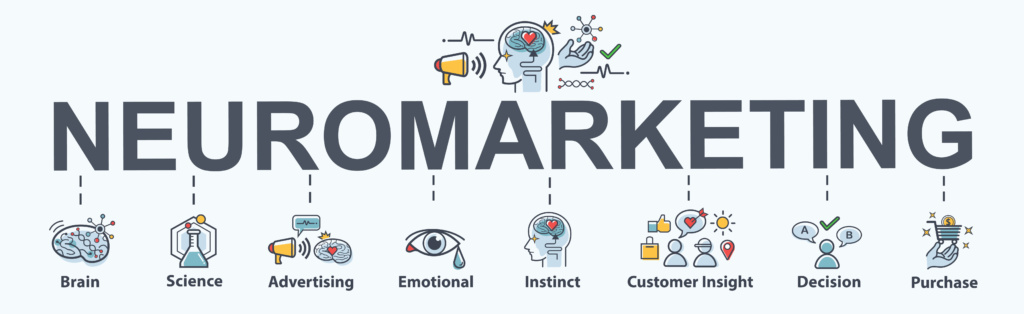
“The way neuroscience and neuro-linguistic programming helps your sales is by allowing you to better understand your prospects’ thinking and their motivation to buy your product. This means more satisfied purchasers for your product.”
~ Chandell Labbozzetta
What is Neuro-Linguistic Programming?
Neuro-Linguistic Programming is the study of how the human brain receives and processes information. If you study the speeches and tools used by influential leaders from the earliest stages of recorded history, you’ll find the essence of NLP techniques and principles inside.
NLP is frequently studies to elevate communication skills, improve negotiation, and generally help people to understand others better. Since successful relationships are at the heart of human happiness, Neuro-Linguistic Programming (NLP) is a very powerful tool for everyone. It is an especially popular field of study for salespeople who want to understand their customers better and deal with the challenge of discovering whether what they are selling would serve them or not.
Neuro-Linguistic Programming can be broken down into three parts:
Part 1: The Neuroscience of Sales:
To understand the neuroscience of sales, we first have to look at the brain. The brain is an intricate network of neurons, or nerve cells. The neurons communicate with each other by firing electrical impulses through “synapses.” They also connect with other neurons in an area called the “cortex.” These connections are like pathways. They can be reinforced through habitual behaviour and altered by creating new behaviours or patterns.
Part 2: The Neurons:
The brain processes information through triggers, which is why Neuro-Linguistic Programming incorporates several techniques that enable you to auto-trigger new behaviours to replace existing ones. It also explains why you can have a visceral response to a person without any overt reason – it could be based on remembered associations and experience (positive or negative).
Part 3: The Linguistics:
Language is a complex system. Even though it is responsible for only around 7% of the information we receive, understanding how language works and the ability to interpret what others are really saying, as well as to grasp how they are hearing our words not only improves your relationships at home and work but also helps salespeople understand what their prospects are thinking and when they have made up their mind to say, “No,” but are too polite to actually articulate that.
Neuroscience and Neuro-Linguistic Programming in Sales and Why I Love Neuroscience!
The reason I love neuroscience and neuro-linguistic programming in sales is because it is so fascinating to watch different areas of the brain light up in response to stimuli and to recognise that just as you can re-program your own thoughts and responses, you can also use that knowledge to better connect with your prospects by understanding their emotions, feelings, and motivations.
Once you’re aware of this, you don’t need sophisticated brain monitoring equipment to gauge how prospects are responding to your sales call, you just need to use your eyes, ears, and intuition. You’ll quickly recognise the difference between genuine objections, and the excuses of a person who has already made a decision, and you’ll understand the best way to respond to help them choose wisely.
Unlike what you may have seen on TV or in movies, there is nothing in NLP that removes your prospect’s freewill and self-determination. Your skill in using NLP will only help you understand your prospect’s true concerns.
NLP Sales Techniques to Increase Your Sales
Here are 5 NLP sales techniques that you can use to increase your sales.
- Understand Buying Strategies – everyone has a specific ‘strategy’ for buying (as well as almost every other area of life). NLP helps you discover exactly what each of your prospect’s unique buying strategies is and how to use the knowledge appropriately. This is especially important for selling high-ticket items.
- Improve Your Timing – based on your understanding of each prospect or client’s buying strategy you can build a flexible sales system that enables you to meet their needs for information, alternatives, and spacing of calls. This way, your prospect always feels as though they are in control of the buying decision.
- Build Rapport – by showing genuine interest and enthusiasm for the person you are talking to and by reflecting their preferred communication style in your choice of language. Focus on being interested, rather than being interesting.
- Empathise – with customers by understanding their feelings and motivations. When you understand these – and demonstrate that understanding – you can better help them make a decision.
- Promote your sales – by reminding yourself and your customers why you sell. This can include using reminders, journaling, and imaging to keep the value of the product or service front and centre.
Understanding NLP & Neuroscience Gives You More Control in Sales
Zig Ziglar famously said, “Timid salespeople have skinny kids.” This is often misunderstood. It’s interpreted to mean that effective salespeople need to be pushy and sell people ‘stuff’ they don’t need and can’t afford… But that is certainly not what Zig intended. As much as anything, Zig’s point was about developing your communications skills so that you help the other person recognise what they really want and see their objections either as genuine reasons why they don’t need what you are offering or as an excuse that is preventing them from getting the outcome they desire.
The real advantage that honing your NLP skills offers salespeople is the ability to gain insight from the language and non-verbal communications of prospects about their real attitude. That enables them to tailor their presentation to the preferences of the prospect and meet their needs.
What Will You Do With This Information?
The internet has completed the democratisation of knowledge.
What you know has much less power than your ability to use that knowledge effectively: that is, having the skills and discernment to use your knowledge for good. As a Master Trainer of NLP and one of Australia’s most effective sales trainers, I know that transformation and skill development is about practice and habit-building… And sometimes removing old habits that no longer serve you. This is especially important in a tight economy where your prospects are more cautious about their investments and expenditures. That’s why NOW is the time to develop and hone the communication skills, of your salespeople and all those in leadership positions.
If you know you need some help, why not explore our Ready Set Sell Program which teaches you to build the habits and skills you need over 30 days? We promise you won’t regret it!

“When it comes to making sales… The simple truth is that we do business with people we like. That’s why relationship building in sales is so important.”
~ Chandell Labbozzetta
When you’re trying to build your business and make sales, it can be difficult to come across as genuine and friendly. You don’t want to seem fake; you just want people to see the value in what you sell. That’s why I believe it’s important to work from the inside out and build relationships rather than rely on tricks and techniques. Your prospects have a BS antenna, just like you do. Luckily, there are plenty of Neuro-Linguistic Programming (NLP) and communication tools to make building relationships in sales an integral part of your personality instead of a conscious facade. Read on for six simple ways you can work on building relationships to make more sales by being more self-assured and authentic.
Be a Confident Sales Person
Many people find it difficult to be confident salespeople or they don’t know how to convey confidence in themselves and their sales abilities to others. They can come across as over-assertive or pushy and that is never a good look.
The challenge is to communicate genuine confidence, not the fake kind. You can boost your confidence by thinking positively, doing a little exercise, and practicing to make yourself feel better.
The problem is that positive thinking takes will-power, and sometimes we’d rather just drift along. That’s where a specific NLP technique can get you back on track and keep you from getting down when things aren’t going your way, and it also helps you stay enthusiastic when things are going well. Even if you don’t understand NLP, here’s a habit that anyone can develop:
- Write down three things you are good at as a sales person – (your notes app on your phone is a great place to do this)
- Also write down three things you are not so good at.
Every time negative thoughts start to pop into your head, add to both these lists by writing down another three things you are good at and three things you are not so good at.
Over time, you’ll collect a robust list in both of these areas. That way, instead of worrying about the things you cannot control, you’ll be focused on the things you can control. Here are a few more tips that can help boost your sales:
Speak from Your Core Values
If you want to make meaningful connections with people, you have to speak from your core values. When you do this, people feel a stronger connection with you, are more likely to value your products and services, and want to get to know you.
A great way to boost the number of people who understand and appreciate your core values, is to start by telling your story in a more personal way. This doesn’t mean that you spend hours talking about yourself, though – that will just make people think that you are self-absorbed. Instead, find a simple way to connect your story to your core values using metaphors and analogies.
Your team members should also speak about their core values – and hopefully they share your esteem for the business you all work in. It’s ok to acknowledge that your product or service doesn’t suit everyone – in fact, that’s a great way to frame your questions and dig deeply for information about the person you are talking to. If you ask the right questions, just about everyone (except for undercover ASIO agents) likes talking about themselves.
Show Yourself and Your Team in Real Life
One of the best ways to convey your core values and build relationships in sales is through non-business-life examples.
We all know that people have a life outside their work, and when you can communicate that you often find unexpected links and connections with your prospects. I’m a keen golfer and as long as I don’t talk about it too much with people who have no interest in golf, it’s a great way of developing a relationship with people who share my interest.
It’s the same for your team members. Encourage them to engage with prospects appropriately and build rapport via non-business interests in pets, hobbies, etc. You should always remember that everyone has a human side no matter what their role in the company.
Stay Flexible and Adaptable
One of the core principles of Neuro-Linguistic Programming (NLP) is that “The person with the most flexibility controls the conversation.” In sales, it’s your responsibility to make adjustments to the conversation and offer so that you highlight the factor that whoever you’re speaking to is most concerned about.
It’s important that you don’t let these adjustments lead to you losing control of the sale and letting your prospect dictate the terms of the sales and delivery. If you aren’t getting the results you want, you and your team should gather information and discuss it carefully. Businesses need to adapt to market conditions, competitors, and prospects’ needs and you should be prepared for this kind of adjustment.
This is also true when you’re having a conversation. Just because you’d planned to spend more time discussing a particular benefit of your product, if you realise that your prospect has not interest, then move on and find the point of pain where they are really interested. If the point you wanted to make was critical to their buying decision, you can circle back to it later using a lateral chunk.
Help People Feel Good About Themselves
If you want to build lasting relationships in sales with prospects and clients so that you keep doors open for further deals, then you’ll need to make a concerted effort to boost the amount of time you spend helping others get what they want. Zig Ziglar used to say, “You can get anything you want in life if you spend enough time helping others get what they want.”
That is an important principle to keep in mind. Figure out what your prospect wants and find a way to position your product or service so that it helps them achieve that. It doesn’t have to take a lot of time, but it will not only help others, but it also helps you feel good about yourself.
NLP Can Help You Build Better Relationships in Sales
There’s probably a reason why NLP didn’t become a formal discipline until the 1950s. It’s most likely connected to the fact that up until the early twentieth century people lived a lot closer to each other and were far less mobile.
That meant that you already knew most of the things you had in common with the people you did business with, and you didn’t need to work so hard to build trust. The chances are that others already knew you from school, family, and church settings, and that you had had plenty of opportunities to develop your communication and conversation skills over time.
It’s different now, which is why people who want to excel try to enhance their understanding of how people think, act, and react… And why NLP tools and techniques are important to help us build relationships in sales.
At Life Puzzle, we are proud to offer the best NLP courses in Australia. Our courses are guaranteed to improve your or your team’s sales skills as we offer a mix of both theoretical and practical NLP sales training. Our NLP courses are designed to provide you with all the tools and techniques you need to be a successful salesperson.
We cover everything from understanding the psychology behind why people buy, to learning how to build rapport and connect with people in a practical way. Our NLP courses are suitable for both beginners and experienced salespeople as we offer a range of courses that cater to all levels. If you are looking for NLP training in Australia, then contact us today to find out more about our NLP courses.

“What differentiates effective sellers from wannabes today is their ability to listen to others, think laterally, and bring fresh ideas and angles to the problems their prospects are facing.”
~ Chandell Labbozzetta
When you think of the concept of Neuro-Linguistic Programming (NLP) sales training, its very title tells you that it’s about the relationship between our brain and our language. It’s actually a twentieth century formalisation of the communication and persuasion tools that leaders and change-makers have used and documented for millennia – tools that were embedded into the education systems of Egypt, China, Greece, and Rome. That systemisation makes the concepts easier to grasp and implement.
Given this background, it is not surprising that NLP is one of the favoured tools of sales trainers all over the world – and that influencers and salespeople use its techniques even when they don’t name them as such but, here are some surprising benefits of NLP training our clients have experienced…
Benefit #1: NLP Sales Training Increases Confidence in All Areas
Professor Dumbledore told Harry that “magic leaves clues” – and so does confidence.
The clues to confidence include a measurable improvement in success in whatever venture you’re engaged in – especially in sales results. This confidence that NLP sales training generates acts like a rolling stone: the more genuine confidence you project, the more sales you close.
Benefit #2: NLP Sales Training Improves Resilience
How do you respond to –
- Negative feedback?
- Bad news of any kind?
- Failure?
- Trauma?
Some people quit.
Some people just go through the motions.
Some people are driven to learn from their experience and to work harder and smarter until they succeed.
The difference is your level of resilience that enables you to keep getting back up, applying the lessons you have learned, and refusing to give up because you are committed to the outcome you are aiming for. NLP sales training can help improve your resilience which in turn will make you a more efficient salesperson.
Benefit #3: NLP Sales Training Enhances Creativity
I will never forget the first time I was introduced to Quantum Linguistics – one of the most powerful tools for both problem-solving and creativity.
I watched my trainer draw out truly unique and powerful solutions to problems that participants had been wrestling with for months, just by asking the right questions appropriately… And I determined to master that skill myself.
I was surprised and disappointed to learn that most NLP trainers don’t use this technique because “it’s too hard to teach” – I’ve never had that problem with my students or clients. The enhanced creativity that NLP sales training can provide is truly priceless.
Benefit #4: NLP Sales Training Nurtures Relationships
Given that NLP is mostly about communication, observation, and listening, it should come as no surprise that NLP sales training nurtures relationships, but it really does surprise people when they discover after a few training sessions that both their work and personal relationships are growing deeper.
In the same way that confused buyers don’t buy, confused (or confusing) communicators don’t have many close relationships.
Benefit #5: NLP Sales Training Develops Self-Awareness
We improve our results and our relationships largely by working on ourselves.
BUT… In order to change ourselves we first need to acknowledge and define the problem we are trying to solve. The beauty of NLP sales training is that it provides us with tools to do this in a non-threatening way and then enables us to identify current strategies and replace them with more positive ones.
Benefit #6: NLP Sales Training Creates Prosperity
This should come as no surprise after the previous 5 benefits I’ve outlined but I want to spend a few minutes here anyway. Like ‘success’ and ‘happiness’, everyone has their own definition of what prosperity means to them, so everyone’s life can look quite different and they can all call themselves ‘prosperous’.
I happen to think that it’s important to feel that you are prosperous – even if you are regularly shifting the goalposts on your definition of success as you reach one level… and the next… and the next.
Just think about it… If you are
- Confident
- Resilient
- Creative
- Relatable
- Self-aware
… Then how can you NOT be prosperous? And NLP sales training helps create prosperity in all of these areas.

“For every complex problem there is an answer that is clear, simple, and wrong.”
~H.L. Mencken
Businesses Large & Small are Doubling their Investment in Sales Training with NLP Sales Techniques
Businesses getting their team trained in NLP sales techniques is a strategically proactive move designed to ensure that they have the deal flow and cash flow to expand as the economy tightens and new opportunities present. It’s a well-established fact that investment in sales training is one of the biggest drivers of resilience during economic turbulence, which is great news for sales training organisations.
The questions I have for you are:
- Will you be left behind?
- Are you getting the sales training you really need?
Many organisations keep offering their sales teams (and these days everyone from receptionists to account executives to implementers are part of your sales team and should be trained) the same tactical sales training over and over again. The reality is that what most people need to heighten their sales skills is sales training that focuses on elevating mindset, communication, and interpersonal skills – the basic scripts and tactics are good starters but the highest performing salespeople are those whose prospects feel that, “My concerns were heard and responded to and I am convinced that this is an excellent decision.”
That makes sales training both easier and harder to design and deliver. It’s simple because your primary goal is to ensure that you focus on taking their mindset, communication, and interpersonal skills to the next level – the principle at the heart of Neuro-Linguistic Programming (NLP).
It’s hard because while you can make dramatic progress almost instantly and accelerate your sales, it takes time and practice to heighten those skills and make them habitual so you can get dramatic results in a 2-3 day (or even hour) training, but it takes consistent reinforcement for most people to make them stick.
Chandell is a Best-selling Author, Master Sales Trainer and a Master Trainer of Neuro-Linguistic Programming (NLP). Experience has taught her that Sales is the #1 Life Skill and that anyone can master it: without this critical skill, your relationships, opportunities, health, and finances all suffer. Take a look at my NLP sales training courses today.
The Danger of Echo Chambers in Sales Training
It’s part of human nature to spend most of our time listening to the same people (usually those with whom we agree, sometimes those who make us angry).
BUT… It’s incredibly dangerous to do this in a rapidly changing world!
As the proverb says, “If all you have is a hammer, then every problem is a nail.” This is a particularly effective strategy for a carpenter, but it’s a disaster for a business owner or salesperson because it makes them ignore the reality around them and often means they miss the opportunity that is staring them in the face.
We all have our preferred mentors, experts we follow, and strategies we adhere to… And that’s essential. If we didn’t, then we’d go crazy jumping from one strategy to the next and never give anything a chance to work.
At the same time, it is also important for each of us to make sure we protect ourselves against the dangers inherent in our own echo chamber by exposing ourselves to other opinions and perspectives especially when it comes to sales.
Listen to Different Perspectives to Boost Your Sales
I have certain people and communities that I’m part of who have an enormous influence on my decisions, and I believe listening to these different perspectives is a great way to boost sales. One of the reasons why NLP is such a key tool for sales professionals is its emphasis on training people to set aside their assumptions and hear what is really being said.
In addition, I also schedule time every day to explore and listen to these different perspectives of people in all areas of life and thought – people who challenge my point of view because they force me to clarify and learn from them.
I encourage you to do the same and make a habit of listening to people who hold different points of view.
Stepping Out of Your Sales Echo Chamber
No matter how valuable your existing community is, you should also really listen to people on the ‘other side’ (and have an open mind as you do so) because it will help you clarify your views and expose weaknesses in your existing sales processes. You may think that you have everything sorted out, but there are always ways that you can step up your effectiveness.
As a business owner or sales professional, you need to pursue a definite goal and follow a clear path if you want to accomplish anything, but you also need to recognise that there are other possibilities for achieving the same aim – and some of them may enhance what you are already doing.
I always challenge my students to choose one area in which they hold strong views and listen to the opposite point of view presented by a credible adherent on their own terms.
Let’s be topical here and talk about sales training:
- There are multiple views on how to conduct a sales call and I’m sure you have one.
- Find a credible expert who holds an opposing view and listen carefully to their argument and supporting facts.
- You don’t need to change your own sales process, just acknowledge that the other side does, in fact, have a reasonable argument with which you disagree.
- You can go one step further and identify why you disagree with the perspective.
- You can be truly courageous and ask what can I learn or apply from this approach.
Today’s society is more polarised than at any time in recent history. We run the risk of becoming the kind of global society that condemned Galileo because he didn’t bend his thinking. You can spearhead the shift by opening your own ears to other perspectives – or you could start a movement by offering your sales team powerful training that transforms their ability to really hear what people have to say.
The Most Effective Sales Technique is…?
The most effective sales technique is that which makes your salespeople better listeners and communicators and Neuro-Linguistic Programming (NLP) sales techniques are the way to go. There’s no question that merely being exposed to NLP sales techniques improves communication skills.
BUT… Very few NLP sales training courses reinforce those skills and reteach them until they become habitual patterns – and very few individuals have the discipline and commitment to keep studying and practising them on their own. This is one of the distinctive characteristics of Chandell Labbozzetta’s NLP Sales Mastery Academy and one of the reasons why international companies invite her back year after year to train everyone from executives to receptionists.

Through expert sales training, NLP coaching, and business development consulting, we’ve helped professionals refine their communications, accelerate their sales and supercharge their personal satisfaction and confidence. Do you want to be one of our success stories?